Bitcoin.
A world worth
understanding.
Step inside bitcointour.nl: sixteen interactive worlds, my original character Bitboy and a museum next door. A visual look at the website I built with Claude for my Bitcoin courses.
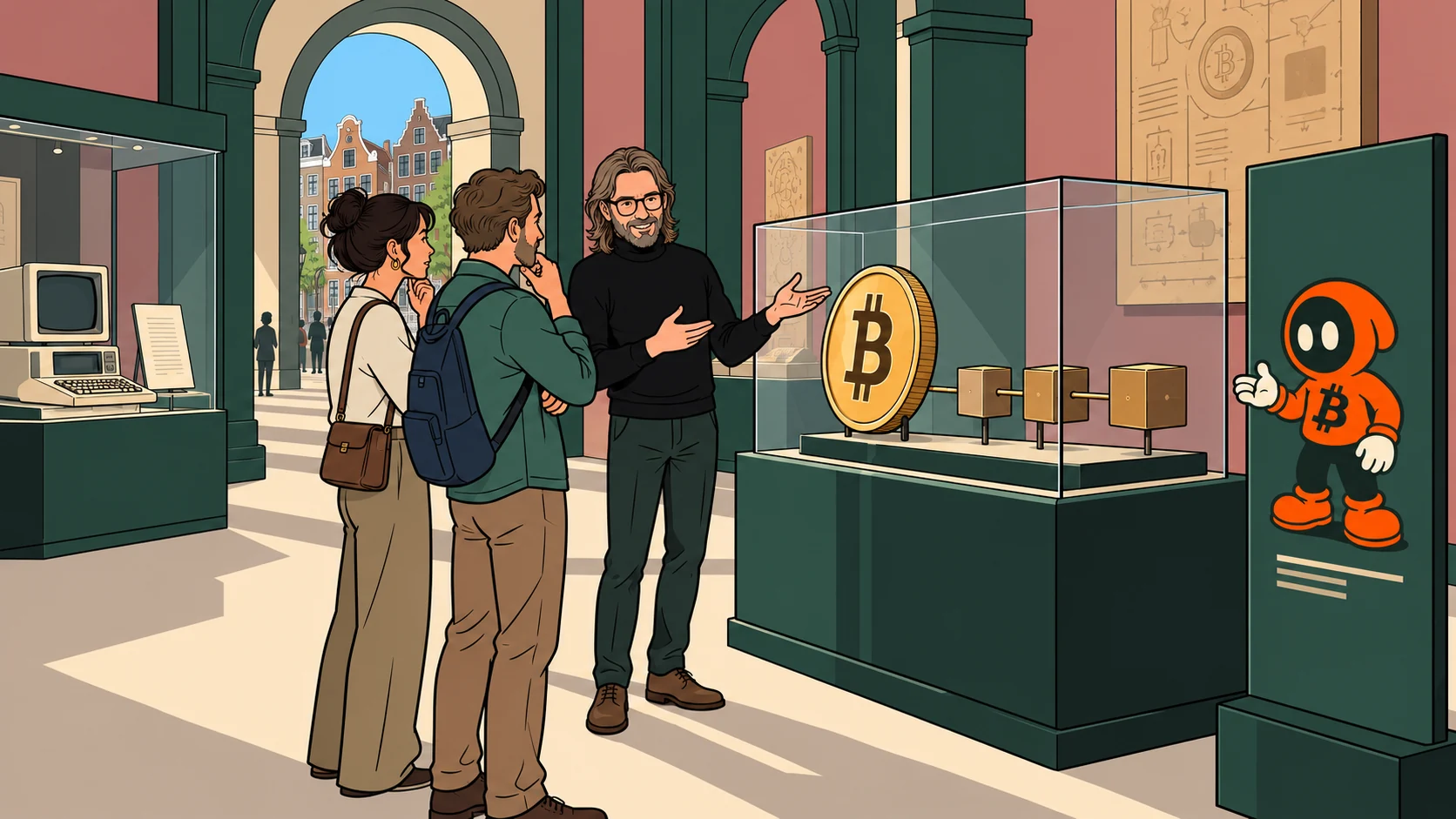
I built bitcointour.nl to use in my Bitcoin courses: sixteen worlds to explore, a museum to wander through and a guide called Bitboy, whom I designed myself. You can open the site right now, choose a chapter and start trying things. This is the world I want to show you.
The Tour is the alternative I wanted to a slide deck: something we can use together during a lesson, then return to afterwards. Start at the opening, use INDEX to jump to a subject, or visit the museum next door. Here is a closer look at what I made—and a few good places to begin.
Start with sixteen worlds.
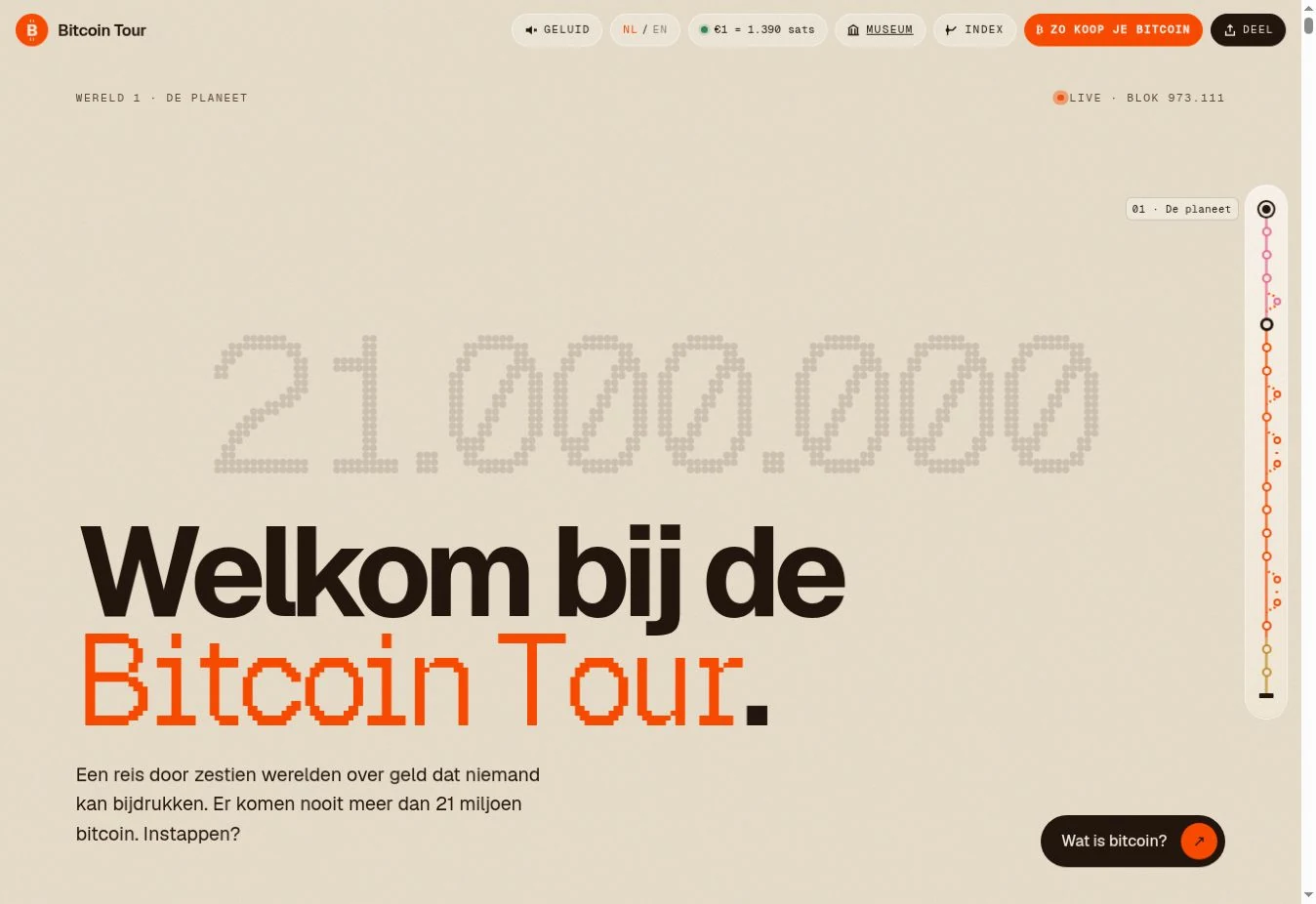
Open bitcointour.nl and begin at De planeet, the first world. The opening introduces the supply limit through 21,000 points, each representing 1,000 bitcoin. The route on the right keeps track of where you are. Use INDEX to jump straight to a subject, or follow the worlds in order.
For a hands-on starting point, choose De mijnhal. Press Gok and look at the hash board, the nonce and the attempts counter. Change the number of leading zeros to explore the difficulty of finding a result. Then try Reken het na to check the block example. It gives me something concrete to point to while explaining mining.
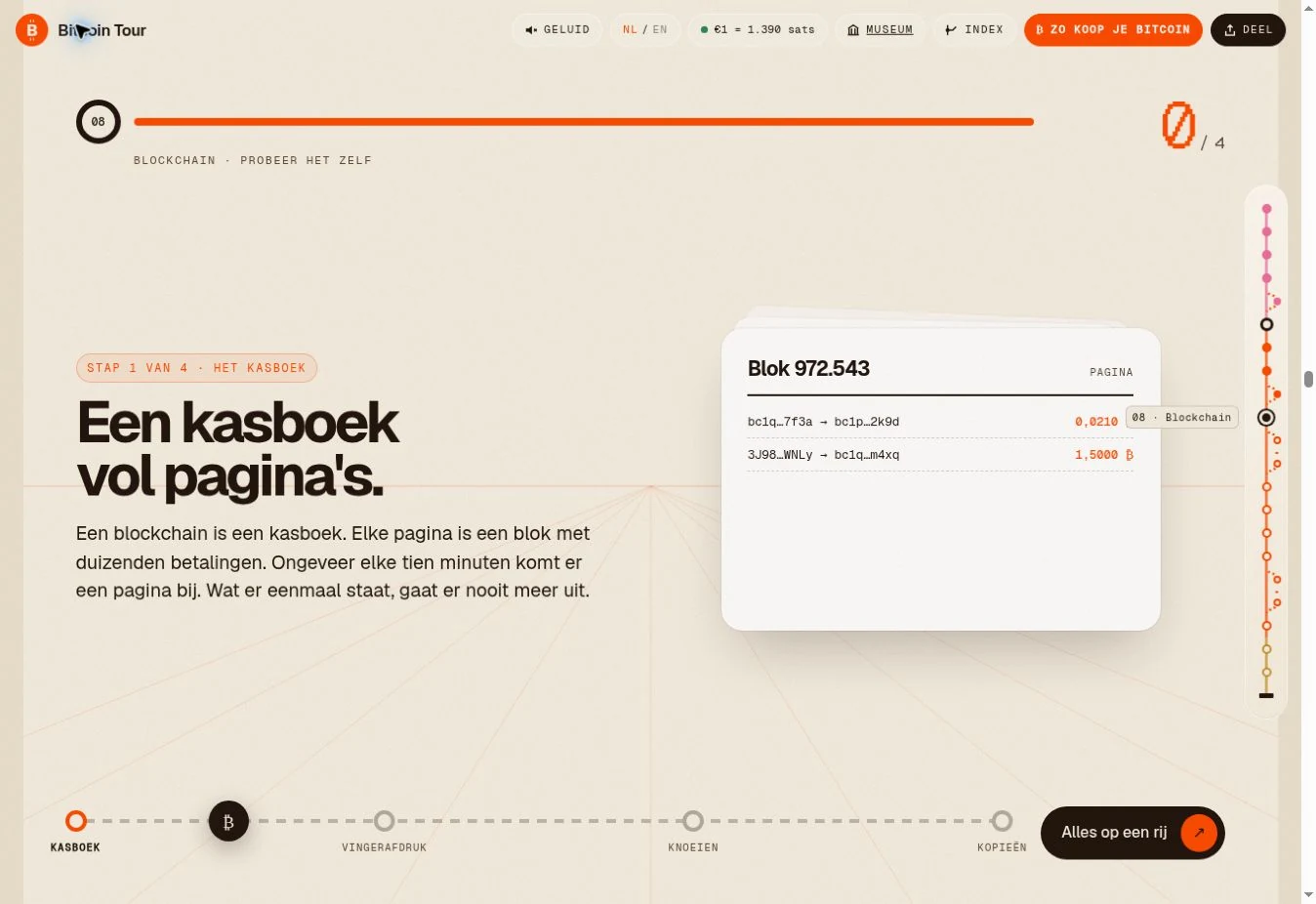
In Blockchain, the explanation becomes an interactive ledger. The four stages move through the ledger, fingerprints, tampering and copies. It is a way to connect an unfamiliar term with a process you can follow. Dutch and English text, a glossary and optional side routes give visitors room to choose how far they want to go.
Three things to try first.
- Open INDEX and choose De mijnhal. Press Gok, then change the target to see how the exercise changes.
- Choose Blockchain and follow the ledger, fingerprint, tampering and copies stages.
- Open Bitboy, press START and try the coin-catching game. Then explore his passport and poses.
I want to give people a place to explore the questions behind their money.
Sander Oord / Bitcoin Tour
Meet Bitboy.
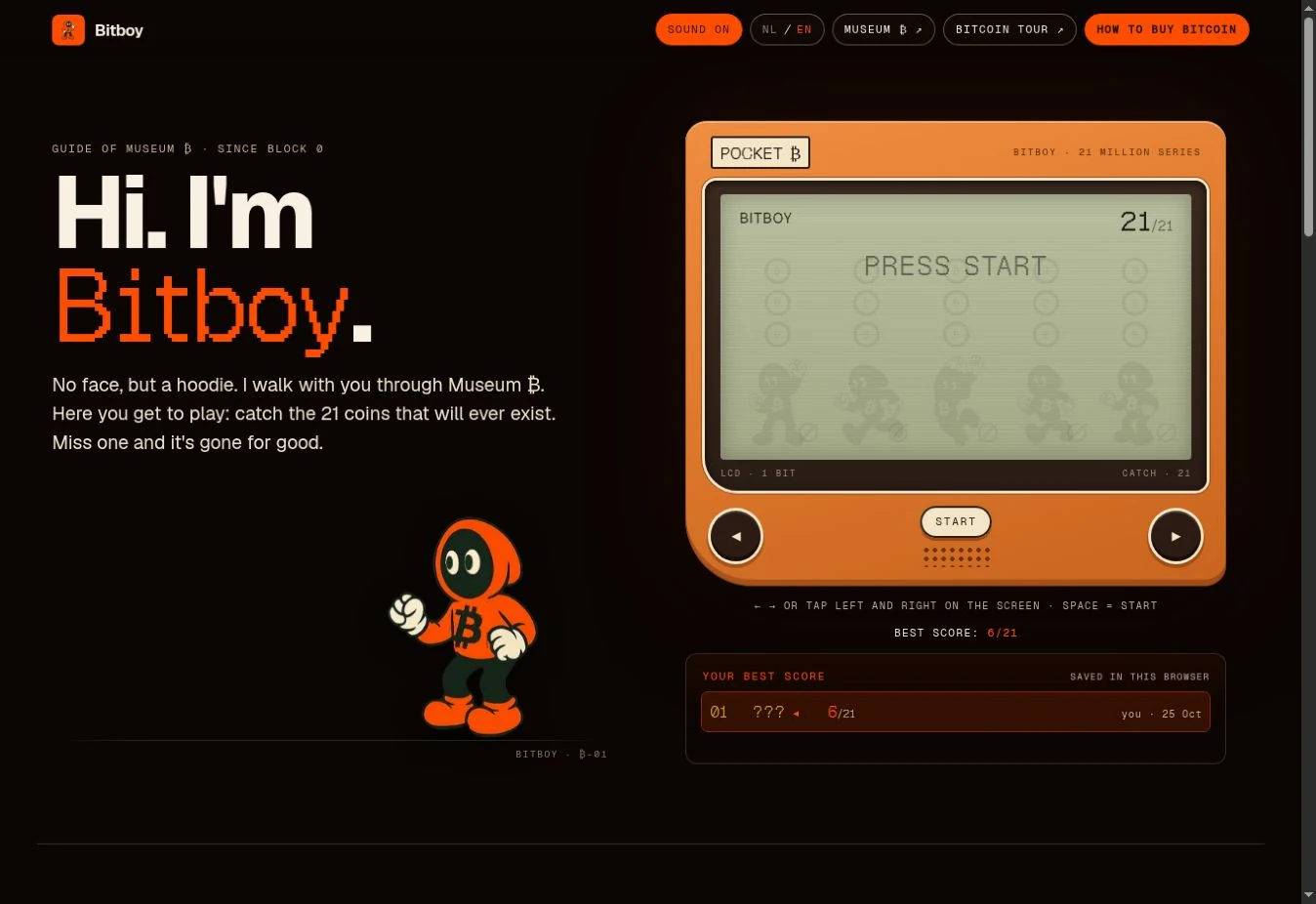
Bitboy is a character I designed myself. An orange hoodie, an anonymous face, white gloves and a little personality. He gives the learning world a recognisable companion: someone who can welcome you, point the way and make a technical subject feel more approachable.
Open Bitboy’s own page and press START on Pocket ₿. Move left and right to catch the falling coins, using the controls or your keyboard. The game plays with a finite set of 21 coins and saves a best score in your browser. Below it you can inspect his passport, try twelve poses and download his model sheet.
That matters to me as an illustrator and designer. A character can give an experience continuity. I want people to recognise where they are and feel invited to continue. Bitboy gives the project an identity that belongs to the lesson.
The museum next door.
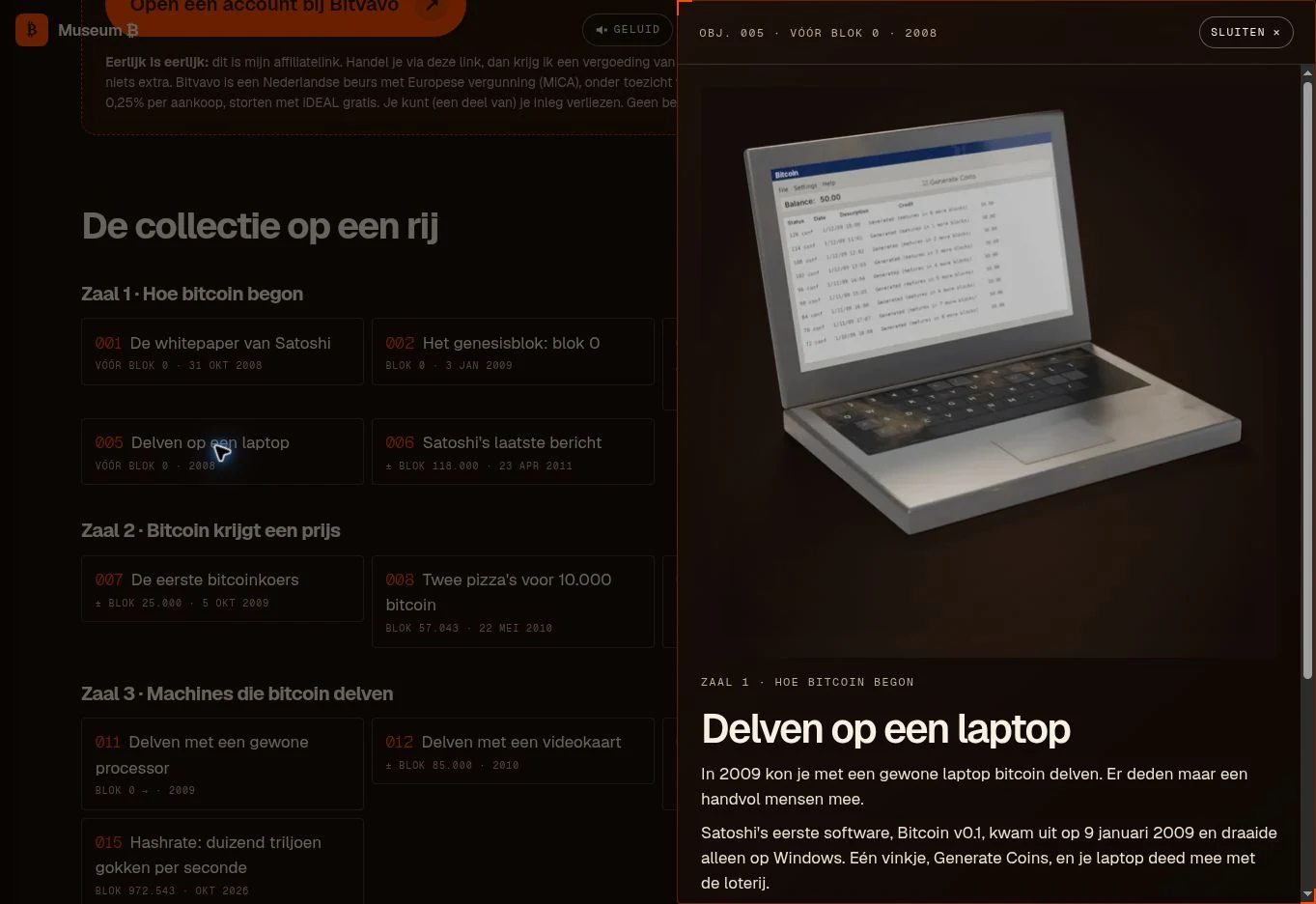
Open the Bitcoin Museum next door. Its floor plan leads through six rooms, and the collection gives each object its own page of explanation. Start with the whitepaper, inspect the early laptop running Bitcoin software, or move forward to mining hardware and stories from around the world.
It also makes room for things going wrong. Lost keys, a discarded hard drive and failed exchanges belong in this history. They make ownership and responsibility concrete. A useful lesson has room for those uncomfortable questions alongside the possibilities.
There are thirty-one collection entries in the version shown here. Click an object to open its image and story, read the provenance note and follow the link back to the matching subject in the Tour. The laptop, for example, links to the mining hall. That connection is useful while teaching: history leads directly back to how the system works.
Fix the money, fix the world.
That phrase captures the philosophy that draws me to Bitcoin. I see money as part of the structure beneath everyday life: how we save, how we exchange our time and how confidently we can make plans. The possibility of money with rules that do not depend on one institution gives me hope.
Inflation is one reason I care. When prices rise broadly, the same amount of money buys less. I want people to understand what that can mean for their savings and the value of their work, and to feel better equipped to ask questions about the choices available to them.
Bitcoin’s issuance rules are designed around a supply limit of 21 million. That is a very different starting point for thinking about money. It does not guarantee purchasing power: Bitcoin’s market price can fall sharply, and owning it involves risks. Understanding the distinction between a supply rule and an investment outcome belongs in the lesson too.
For me, “fix the money, fix the world” is an aspiration and a lens through which to explore fairness, ownership and the future. I want to open that discussion with people. The hope is in gaining understanding and the ability to make considered choices.
Building a teaching tool with Claude.
AI gave me a practical way to bring the teaching idea, the visual direction and the interactions together. I built the website with Claude, using the conversation to make the experience concrete and keep developing it. My knowledge of the subject and the way I want to explain it give that process its direction.
The result brings together work I enjoy doing: teaching, illustration, interaction and building things. The project can grow as new questions arise. A concept that is hard to explain can become the next scene or exercise. A story worth remembering can become another object in the museum.
You can explore the live result at bitcointour.nl. The Lab entry collects the project, its features and the making notes; the Tour itself is where you can try it.
I would be glad to help you find your way in.
I give Bitcoin courses and enjoy helping people take their first steps in understanding it. We can talk about the philosophy, inflation, the technology and the practical questions around wallets, keys and keeping control. The Tour gives those conversations a shared starting point.
You do not need to arrive knowing the vocabulary or sharing my conviction. Bring the question you have been wanting to ask. I want people to leave with a clearer understanding of what Bitcoin offers, what it asks of them and which questions they still want to investigate.
If you would like to learn with me, get in touch about a course or an introductory conversation. I am happy to help you find a starting point. My role here is education; decisions about money remain personal.
That is the hope behind this world: that understanding something which once felt distant can give you a little more agency in your own life.