Kiasmos.
Close to the world.
Field recordings, analogue instruments and a room that slowly becomes a dance floor. What Kiasmos remind me about making things with technology.
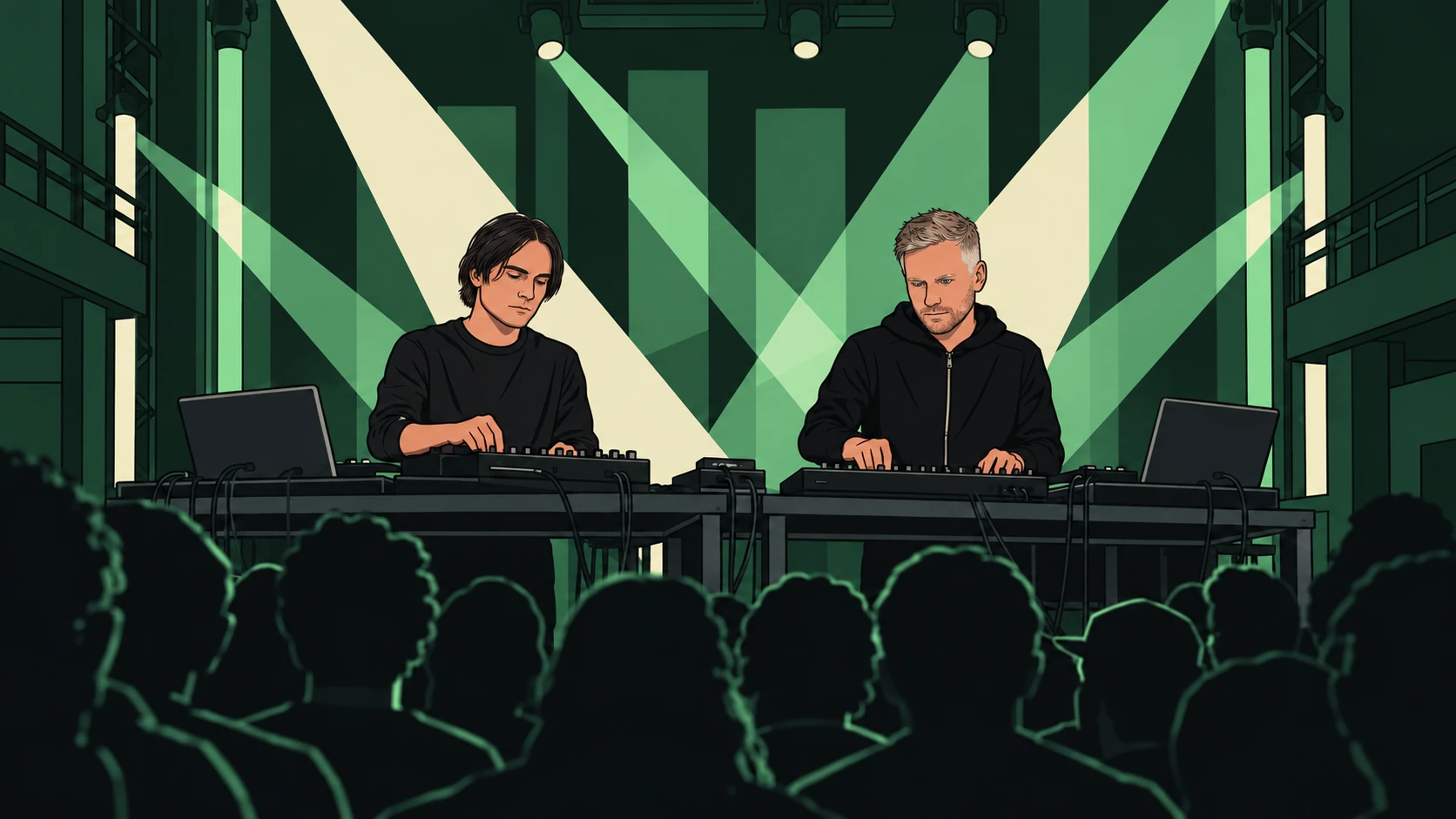
First of all, I simply love listening to Kiasmos. There is a tenderness in their music that can stay with me even when the beat becomes insistent. But I am also drawn to how carefully it feels designed: clear, restrained and full of space.
Kiasmos bring together Icelandic composer Ólafur Arnalds and Faroese musician Janus Rasmussen.1 What interests me is the connection I hear between their electronic world and the physical one. The music can feel very current while still holding onto the grain of a place, an instrument or a human gesture.
The world is already making sound.
A field recording is a recording made out in the world. That simple idea changes where a piece of music can begin. You can start by noticing a sound before deciding what it might become.
While working in Bali on II, the duo sampled gamelan percussion and brought birds and crickets from their surroundings into the record. Dazed grew out of a slow morning, with piano, a gentle beat and live percussion.2
There is a more industrial example in Janus’s own work. For his solo track Neyð, he recorded abandoned machinery and containers outside a former fish factory, then sliced the material in Ableton into a percussion loop.3 It is a lovely example of listening to an ordinary place until it offers you something unexpected.
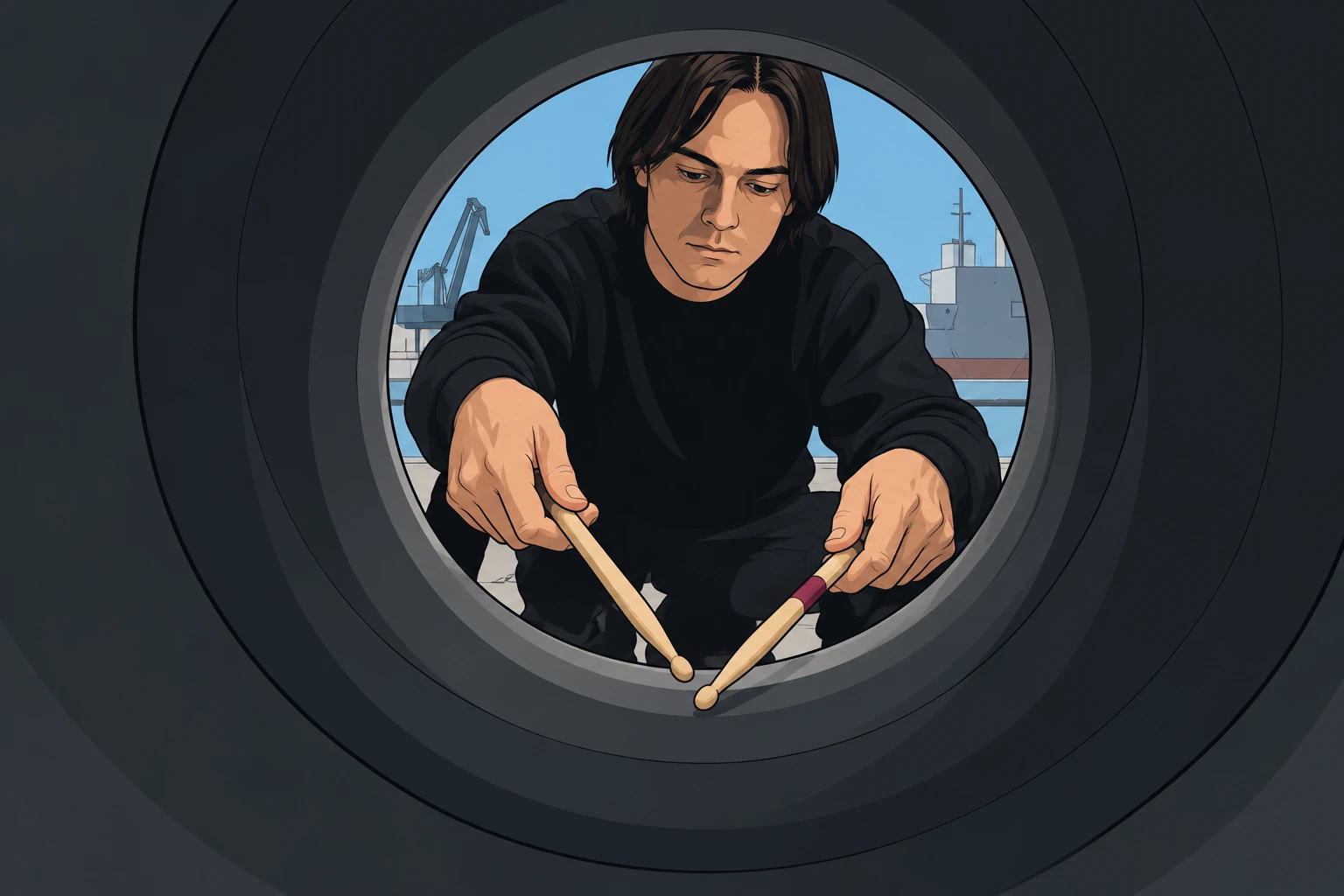
The production video linked below makes that curiosity tangible: field recordings, textures and accidental loops become musical material.9 In the harbour recording scene, Janus taps a metal pipe with two wooden drumsticks. There is something wonderfully direct about it: first a physical gesture, then a sound you can carry into the studio.
What I like about that approach is the attention it asks for. A sound is worth keeping because someone heard a possibility in it. I recognise that feeling from photography: the moment when you stop walking, look again, and find something you would otherwise have passed.
Keep listening to the world outside the screen.
What I take from their way of working.
A little distance changes everything.
On Laced, Janus recorded a breakdown while walking out of the room into the garden. The music becomes distant and crickets take over. It is a real change of position, captured in sound.4
I find that beautiful. Space becomes something you can hear happening. The room, the air and the outside world become part of the arrangement.
Their organic feeling also has a compositional side: they describe chord phrases of five, six or seven bars against a 4/4 pulse, loosening the sense of where a cycle begins.4 To my ears, that creates a gentle movement that feels less like a repeated block and more like something unfolding.
I hear a resemblance to natural rhythms in that movement. That is my reading of the music: its small shifts remind me of patterns you can recognise without expecting every repetition to be identical.
Modern tools. Physical decisions.
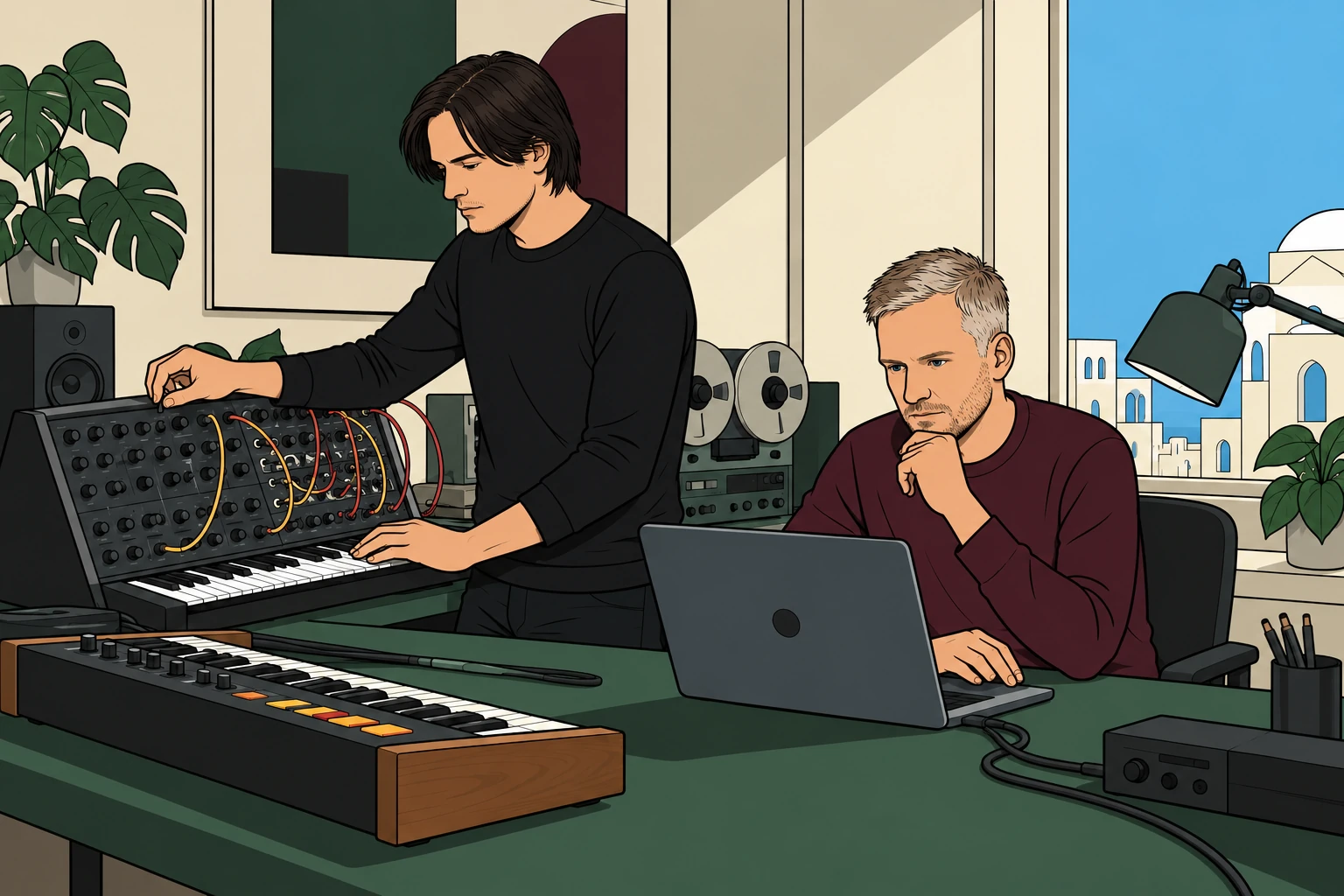
Ableton Live is indeed part of their process, alongside Pro Tools. In their 2024 interview they describe beginning ideas in Ableton and moving detailed production into Pro Tools.4
They also record their own percussion. In an earlier interview, the duo described chopping and rearranging performances; even the snare in Blurred came from Ólafur striking the piano.6 I love that little detail. An instrument can offer more than the sound you expected from it.
The tools make those choices possible. The interesting part, for me, is still the choice itself: what to capture, where to cut, how much to repeat and when to leave room.
A few instruments behind the sound.
These are documented examples from their studio and earlier performances, rather than a fixed equipment list for every show.
- Korg PS-3100
- A recurring studio instrument, prominent in the making of II.5
- Korg MS-20
- Used by Janus for layered bass on Neyð.3
- Korg MS-10
- Discussed for bass on the Blurred-era material.6
- Roland Juno-60
- A familiar source of pads in their earlier recordings and live setup.6
- Expressive E Osmose / Nonlinear Labs C15
- Newer digital instruments they describe using on II.5
- Novation Bass Station II
- Part of Ólafur’s earlier live station.6
For the 2024 live return, they described replacing some touring analogue synths with MIDI keyboards and software emulations, including Softube Model 84.4 The studio instruments and the touring rig have different jobs.
Watch the listening become a track.
Janus also shares the process through his production videos. I like having that doorway into the music: you can listen to the finished work, then spend time with the decisions behind it. His videos offer different ways in: organic sound-making, drums and a wider collection of production tricks.91011
In his interview with Fifteen Questions, he describes Ableton as an instrument he practises. Fluency helps an idea keep its momentum. He also sometimes records hardware synths in the studio and takes those recordings home to arrange on his laptop, giving those two stages their own space.12
That feels close to how I like to work. There is a time to collect, a time to experiment and a time to shape. Getting comfortable with the tools leaves more attention available for the material itself.
Organic production tricks
Start outside the studio: field recordings, textures and accidental loops.
Watch the video ↗02 / RhythmMake CRAZY drums with these tips!
Spend time with Janus’s approach to making electronic drums.
Watch the tutorial ↗03 / Keep exploringProduction tricks
More of Janus’s tutorials, including reverb pre-delay and drum production.
Explore the playlist ↗My suggestion: watch one, then try collecting a few sounds of your own. Give yourself time to hear what they might become.
From a quiet opening to a room in motion.
When I saw them at Melkweg in Amsterdam, the build was wonderful. The set began quietly, giving you time to enter its world. Gradually the rhythms took up more space, until the evening felt close to a techno night.
That progression is what stayed with me. The intensity felt earned. Each stage made the next one possible, and the quieter opening was still part of what made the later energy so good.
As a designer, I find a lot to admire in that. You can shape attention through pace, contrast and space. A small change becomes powerful when you have given people enough room to notice it. That applies to a page, an image and a live set.
A landscape around the music.
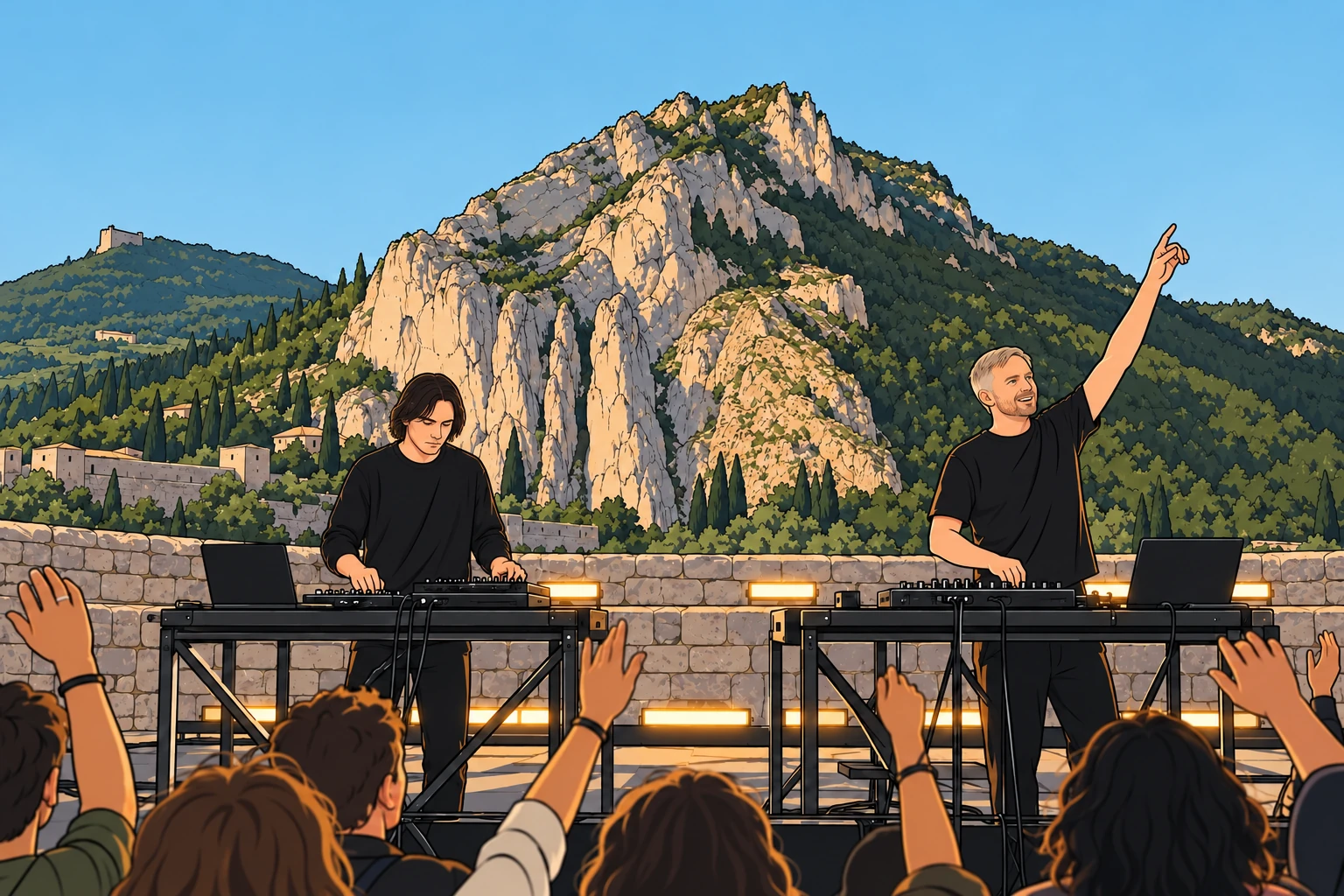
The Cercle performance at the Citadelle de Sisteron brings another setting into view: historic stone, the Durance and the landscape between the Alps and Provence. Cercle published the full set in July 2024.7
For me, it is a fitting place to spend time with their music. The relationship between an electronic performance and a physical setting becomes visible. Start with a few minutes, then give the set enough time to develop.
Watch the Cercle set ↗Listening route: Grown opens the set, Sisteron arrives at 18:40, and Bent begins at 1:14:30.7
The part I recognise in my own work.
I work with a lot of technology, and I am excited by what it lets me make. At the same time, I want nature to stay close. I want to keep looking, listening and paying attention to things that exist beyond the software.
That is the connection I make between Kiasmos and my work with AI and design. Their practice gives me a way to think about using powerful tools while staying attentive to the material, the place and the people involved.
Minimalism matters here too. I see restraint in the way their music is presented, and I hear it in the space around a phrase or a beat. It makes me want to ask a better question of my own work: which details are worth bringing forward, and which can I let go?
Sometimes the next useful idea begins by closing the laptop for a moment and noticing what is already there.