Human in the loop.
By design.
Most creative teams treat AI as a tool question. It is an operations question, and the answer sits in the workflow.
Ask a creative team how they use AI and you usually get a list of tools. One for images, one for copy, one for video. The list changes every few months, and the work mostly stays the same.
I think the list is the wrong place to start. A tool makes one person faster at one task. It does not change how work is briefed, reviewed, approved and delivered. That is where most of the time goes, and where most of the risk sits.
Start with the recurring problem.
Every team has work that repeats: resizing, versioning, checking a layout against brand rules, writing the tenth variant of the same message. Pick one of those. Describe what a better outcome looks like before you choose a model. If you cannot describe it, a tool will not help you find it.
Decide where people decide.
"Human in the loop" is often said and rarely designed. It means naming the moments where a person approves, corrects or stops the work, and who that person is. Brand standards, source material and review responsibilities belong inside the process. Left outside it, they become a checklist nobody opens. Output quality depends on those decisions as much as on the model.
Let the human role evolve.
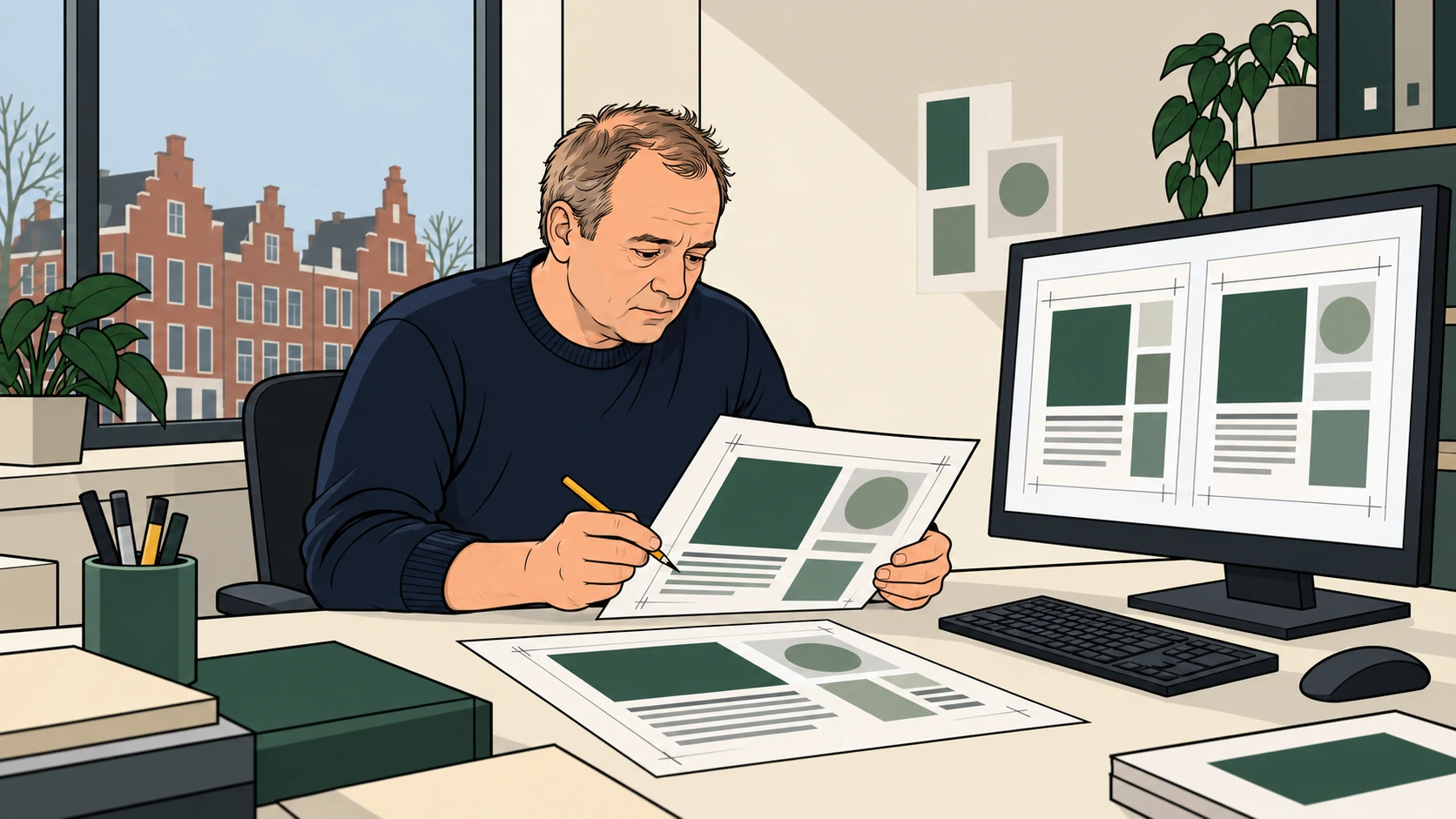
The human role should change in phases as AI becomes part of the workflow. In the first phase, give the desktop publishing professional more room to inspect, correct and learn. Keep review points close together, make it easy to stop or redo a step, and leave time to understand why the system produced an outcome. This is how people build the confidence and judgement to work with AI independently.
As that experience grows, the role can move from executing desktop publishing work towards directing it. The professional becomes more strategic: shaping templates and brand rules, choosing where automation is useful, improving the workflow and handling exceptions. AI can take on more of the recurring execution, while the person sets the conditions, evaluates the evidence and decides when the system needs to change.
That shift should follow demonstrated capability, not a fixed deadline. Look at whether people can use AI independently, recognise its limits and take initiative to improve the process. Move review points deliberately as that capability grows. Human in the loop is not one permanent checkpoint; it is a functional role that develops with the people and the system.
Make the evidence visible.
Regulation is moving towards transparency about AI-generated content, and clients ask about it already. A yes-or-no label is a thin answer. What a reviewer needs is what is known about a file: which tool touched it, what the metadata says, what is missing. Missing information should stay marked as unknown. A team that can show this can talk about quality and provenance together.
Build before you scale.
A working prototype settles discussions that a presentation cannot. Put it next to the current way of working and look at time, rework, quality and whether people use it without being told to. Let that decide the next investment.
What this asks of creative leaders.
Less attention to which model is best this month. More attention to where judgement sits, how people develop the ability to direct AI, and what you can show afterwards. Creative leaders need to make room for that progression: from hands-on review and correction towards ownership of the workflow. That is design work, applied to the process instead of the page.