CREATIVITY.
A survival
skill.
I believe creativity is the most important skill for navigating the AI revolution. It helps us find new angles on the technology, our work and the possibilities ahead.
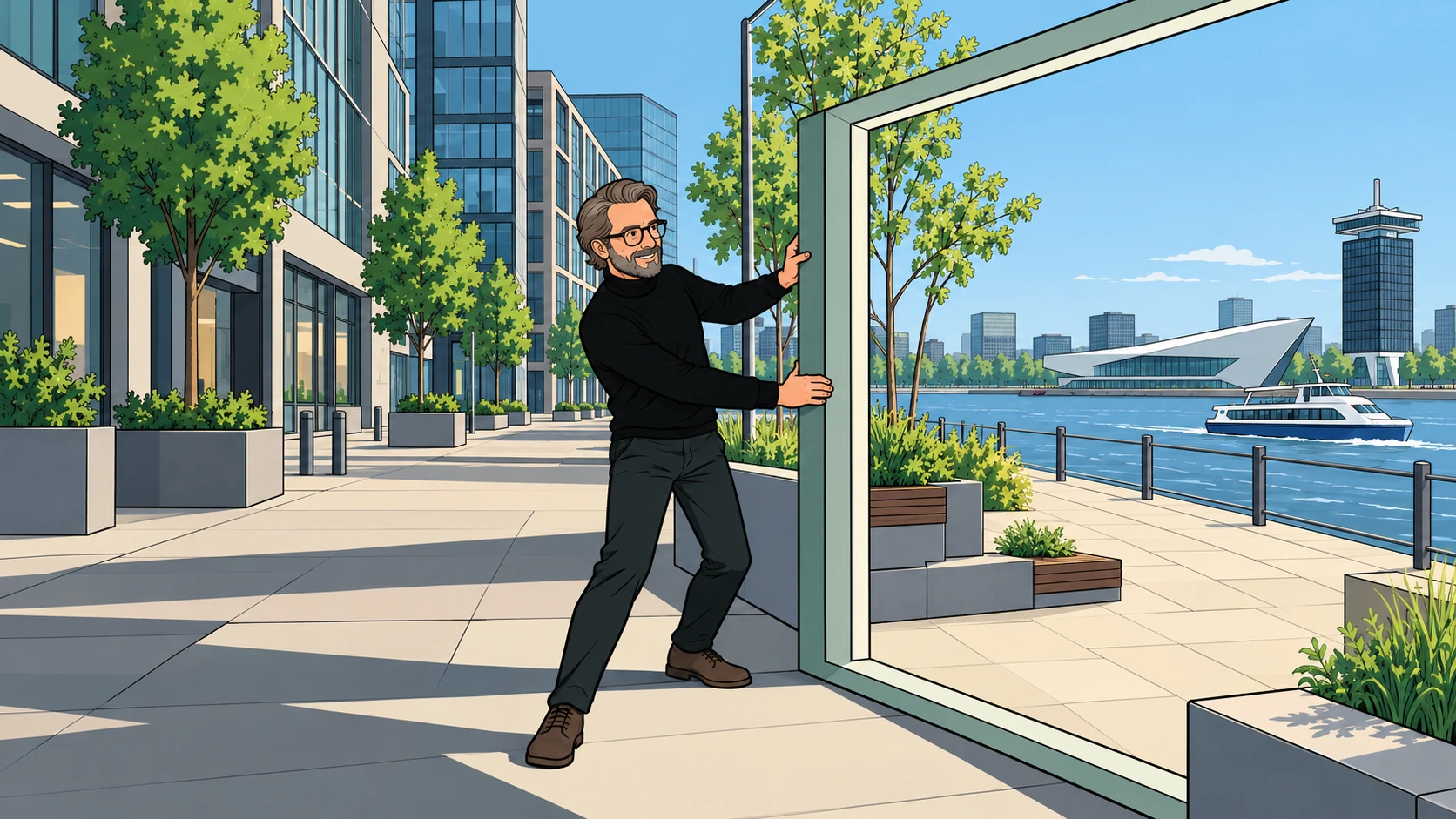
I believe creativity is the most important survival skill in the AI revolution. When familiar ways of working begin to shift, it gives us the ability to imagine another approach. To find a useful question. To see a possibility in our own situation that was not obvious yesterday.
The uncertainty is real. A skill you spent years developing can suddenly feel less distinctive. A task that once took a day can become something a tool handles in minutes. I understand why the first question is often: what does this mean for me? Creativity gives us a way to work with that question.
Look beyond the first answer.
Creativity matters far beyond making images, writing stories or designing things. It is also the ability to connect ideas, question an assumption and approach a familiar problem from an unfamiliar direction. That makes it relevant to anyone whose work is changing.
A job title can make the future feel narrow. Looking at the problems you help people solve creates more room. A designer facing automated production might explore how to improve the brief, shape the system or judge what deserves to be made. Someone spending hours assembling information might experiment with helping others understand it and decide what to do next.
These are possibilities to investigate, rather than guaranteed new roles. The creative move is to open up the question before accepting the first answer. What value do I contribute? Where else could that value be useful? What could I attempt now that was previously too difficult?
Use AI to widen your perspective.
AI can be part of that exploration. I can ask it for several approaches to a problem, then change the constraints and see what happens. I can ask it to challenge an assumption, describe the situation from another person’s perspective or point out what my preferred solution leaves unresolved.
The quality of that exchange depends on the questions I bring and the attention I give the answers. A fluent response can still be shallow or wrong. I need to compare it with the actual situation, bring in other people and decide which ideas are worth testing.
For me, creativity lives in that active relationship: making connections, changing direction and recognising an unexpected opportunity. Accepting every generated suggestion would surrender precisely the judgement I want to develop.
Creativity gives me room to move when the familiar route changes.
Sander Oord / A personal perspective
Make the question small enough to try.
Trying to predict your entire future can leave you stuck. A small experiment gives you something concrete to learn from. Choose a recurring task, look at it from a different angle and try one alternative. Show the result to someone who understands the work.
Imagine a team struggling to compare competing proposals. The obvious AI experiment might be to generate more proposals. A different angle would be to build a simple way to expose assumptions and trade-offs. Another might be to help the team agree on the question before producing anything. The same technology can support very different intentions.
Creativity becomes useful when an idea meets reality. Does it help someone? What breaks? Which part still needs a person? Each answer can inform the next attempt. You do not need certainty about the whole revolution to learn something useful this week.
Five questions for your own situation.
Take one task or part of your role that AI is changing. Give yourself a few minutes with these questions before opening another tool:
- What useful outcome am I helping someone achieve?
- Which part of the current approach am I treating as fixed?
- What changes if I look at this through a colleague’s or customer’s eyes?
- What becomes possible if one time-consuming step gets much easier?
- What is the smallest experiment that could teach me whether this idea helps?
You can bring those questions to AI, a colleague or a blank sheet of paper. Keep several possibilities open long enough to compare them, then choose one to test.
Keep your options open.
Creativity cannot guarantee job security, and adapting to AI also requires learning, support and access to the right tools. People do not all have the same room to experiment. I still see creative thinking as the most important skill to strengthen, because it helps us discover what that room could be.
It can be practised through curiosity, observation, conversation and making things. Notice something outside your own field. Ask a better follow-up question. Try an approach you would normally dismiss. Reflect on why an experiment worked or failed.
I want to keep developing the ability to find new angles on AI and on my own situation. That is how I hope to stay involved in shaping what comes next. Creativity gives me possibilities to work with—and a reason to begin.