Anyone Can Draw
Straight Lines.
Jaguar Type 00 and Spyker C8 Preliator XXV. Two very different ideas of presence, heritage and craft — and why I find myself drawn to the more elaborate one.
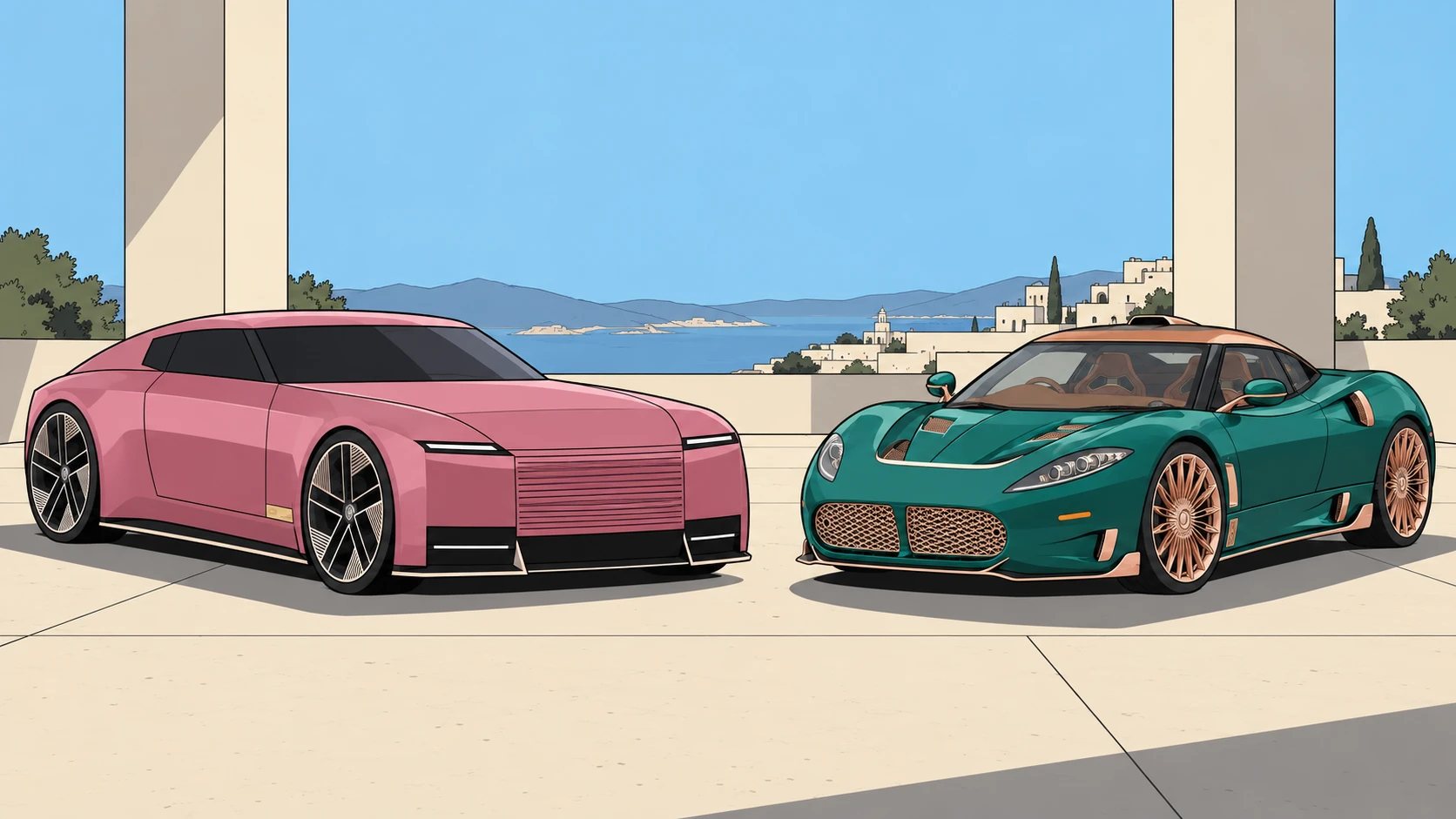
“Anyone can draw straight lines.” I heard that line from someone else. I cannot reliably name its author, and I am certainly not claiming it as my own. But it keeps coming back to me when I look at the Jaguar Type 00.
It is a deliberately provocative way to begin. Drawing a line is easy. Giving it the right length, tension and relationship to everything around it is where the work starts. A quiet surface can take an extraordinary amount of judgment. Still, the line captures a question I want to ask: when does reduction create character, and when does it take too much away?
The new Spyker C8 Preliator XXV Coupé gives me a fascinating counterpoint. Here is a car that seems to enjoy every curve, every opening, every piece of metal. Put the two beside each other and you can almost feel their designers pulling in opposite directions.
I have not seen the Type 00 in person. My response comes from photographs, films and the way the design has been presented. Scale, light and moving around a real object could change that response. For now, this is a designer looking at two very different proposals.
A long bonnet. A different kind of tension.
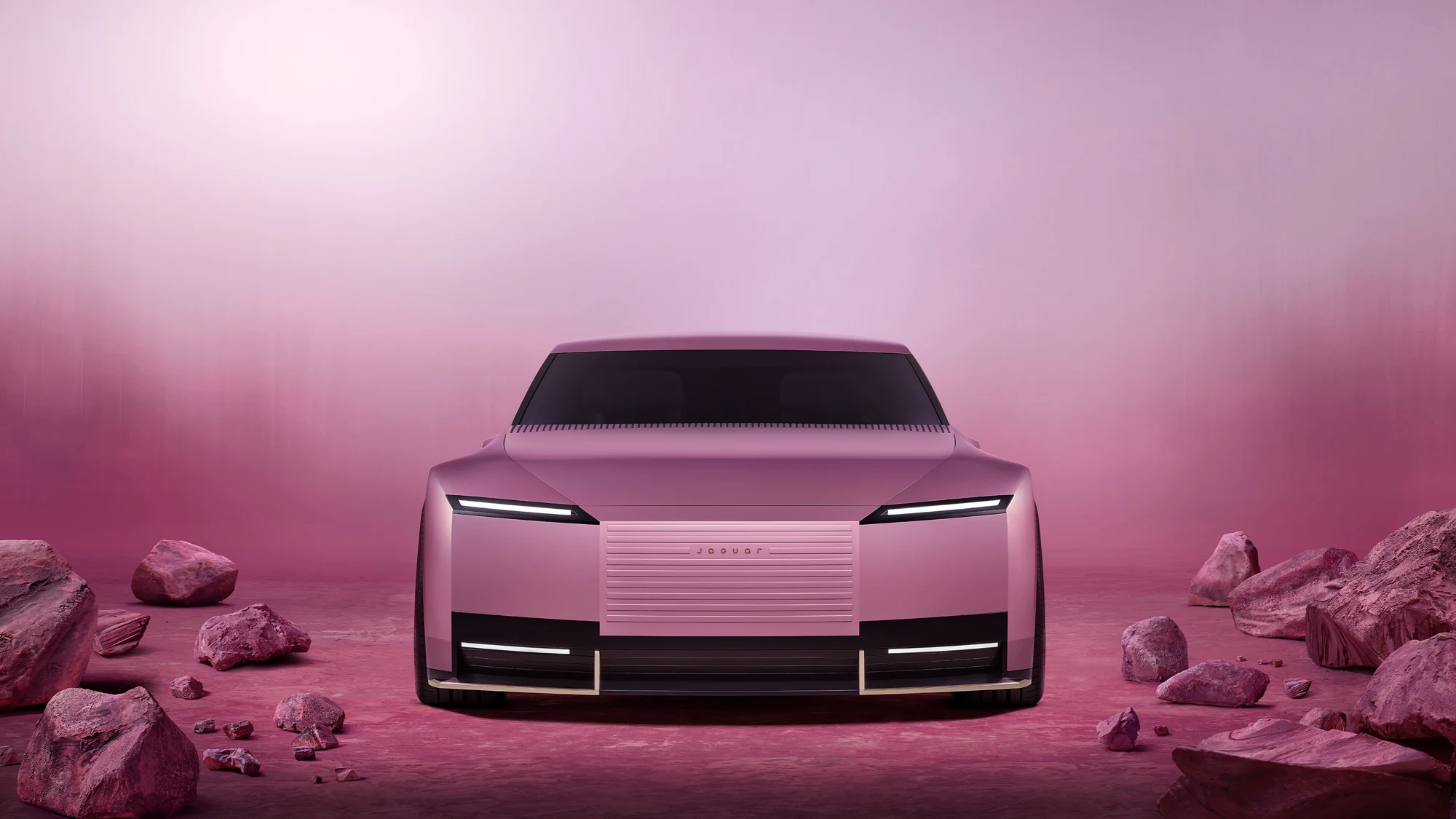
The Type 00 was revealed in December 2024 as an electric design vision. Its language now continues into the Type 01, the four-door production GT Jaguar unveiled on 6 October 2026. The concept is the starting point of a direction that is reaching the road. 1 6
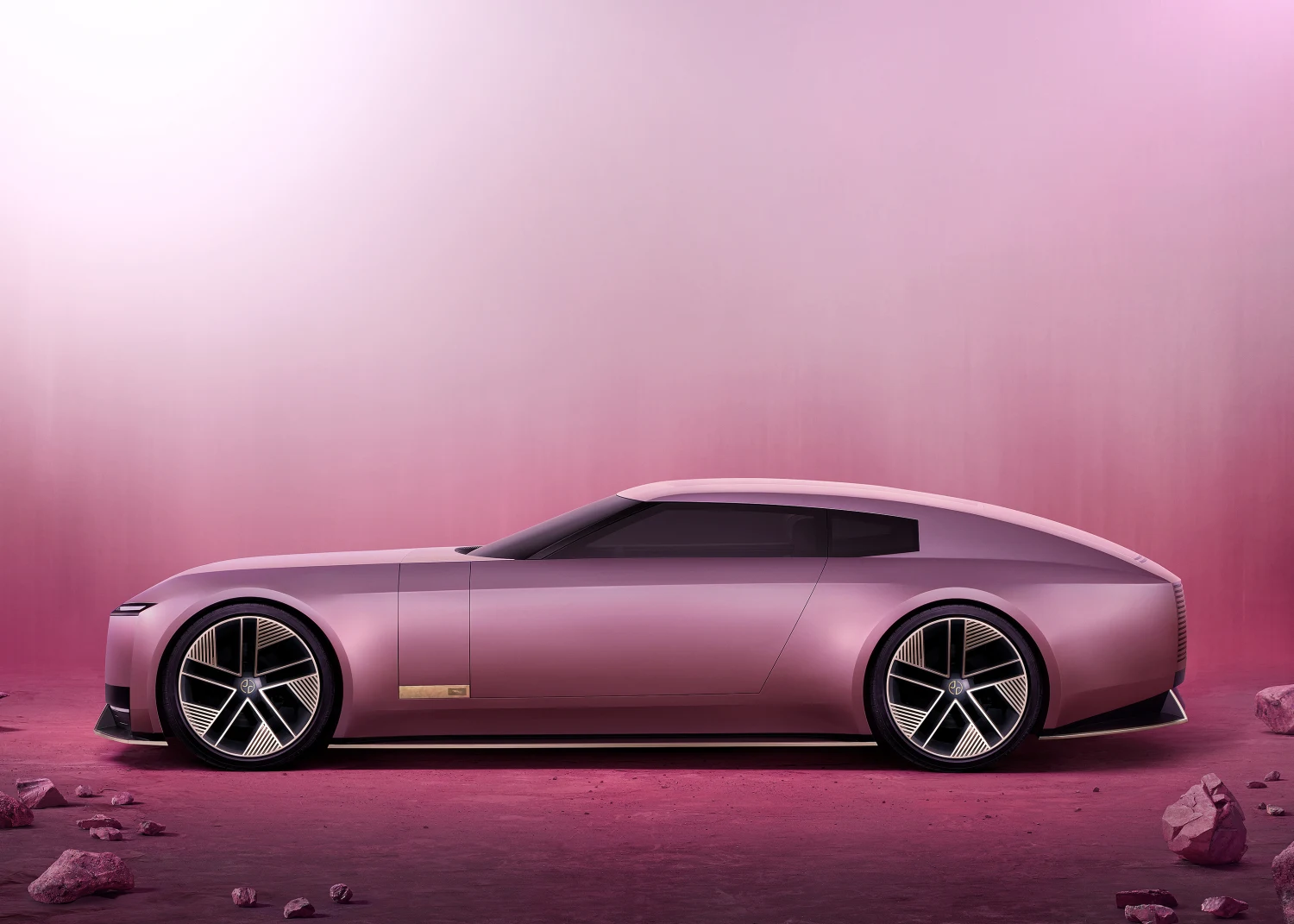
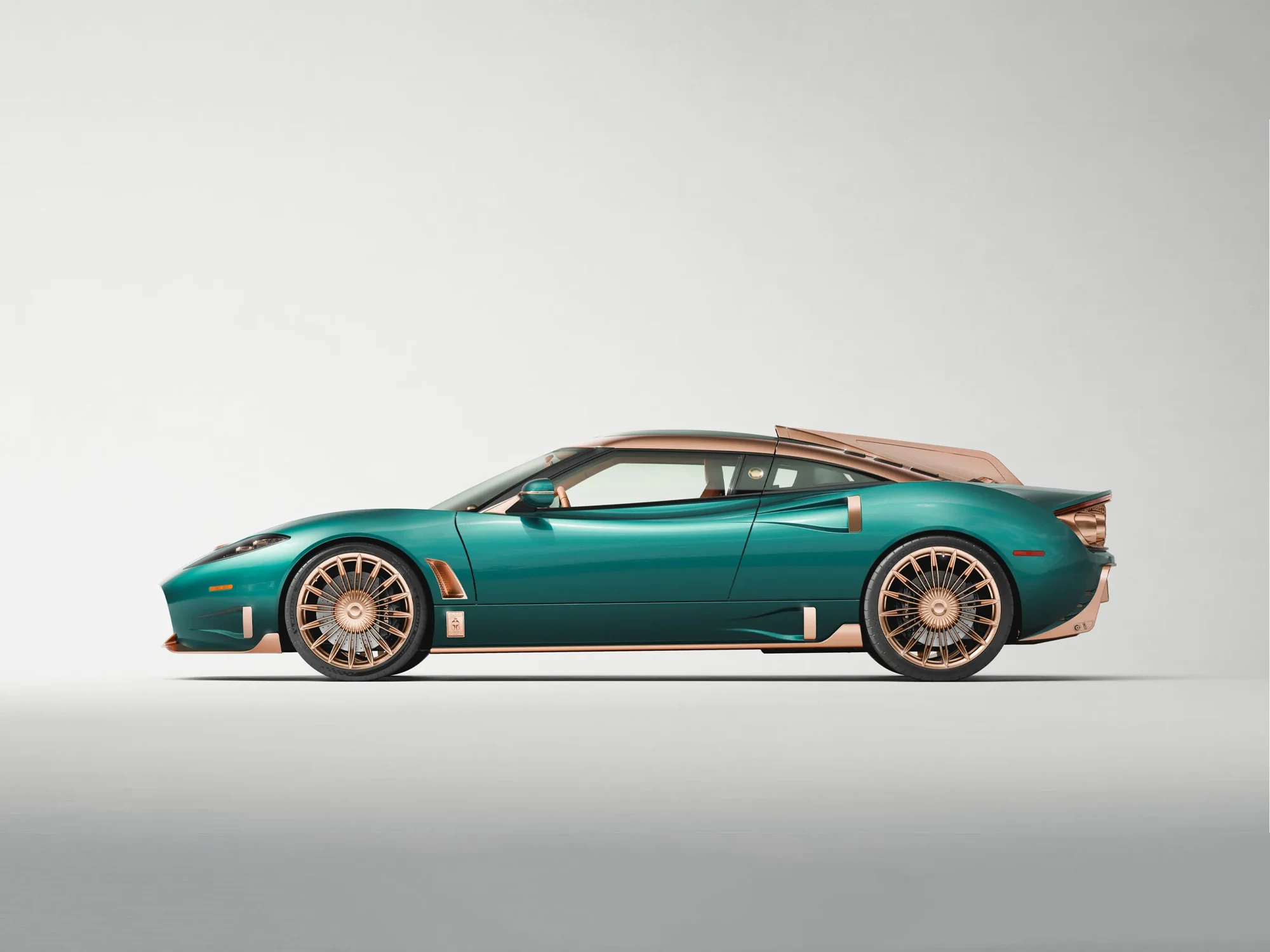
In the side view, I can still find a trace of Jaguar. The long bonnet. The cabin set back along the body. The feeling of a low roof being drawn into a flowing rear. Somewhere in those proportions is an echo of the E-type, even though the treatment of the surfaces takes me somewhere very different.
The Jaguar I carry in my head has a physical tension to it. I read a curve as something stretched over muscle. On the Type 00, the broad planes and disciplined horizontal lines give me a more architectural impression. The nose looks almost like the end of a solid volume.
That has presence. It certainly makes me stop. But I keep looking for another movement in the surface, something that rewards the second glance as much as the first. The confidence is clear to me. The emotional connection is still forming.
The idea is heading for the road.
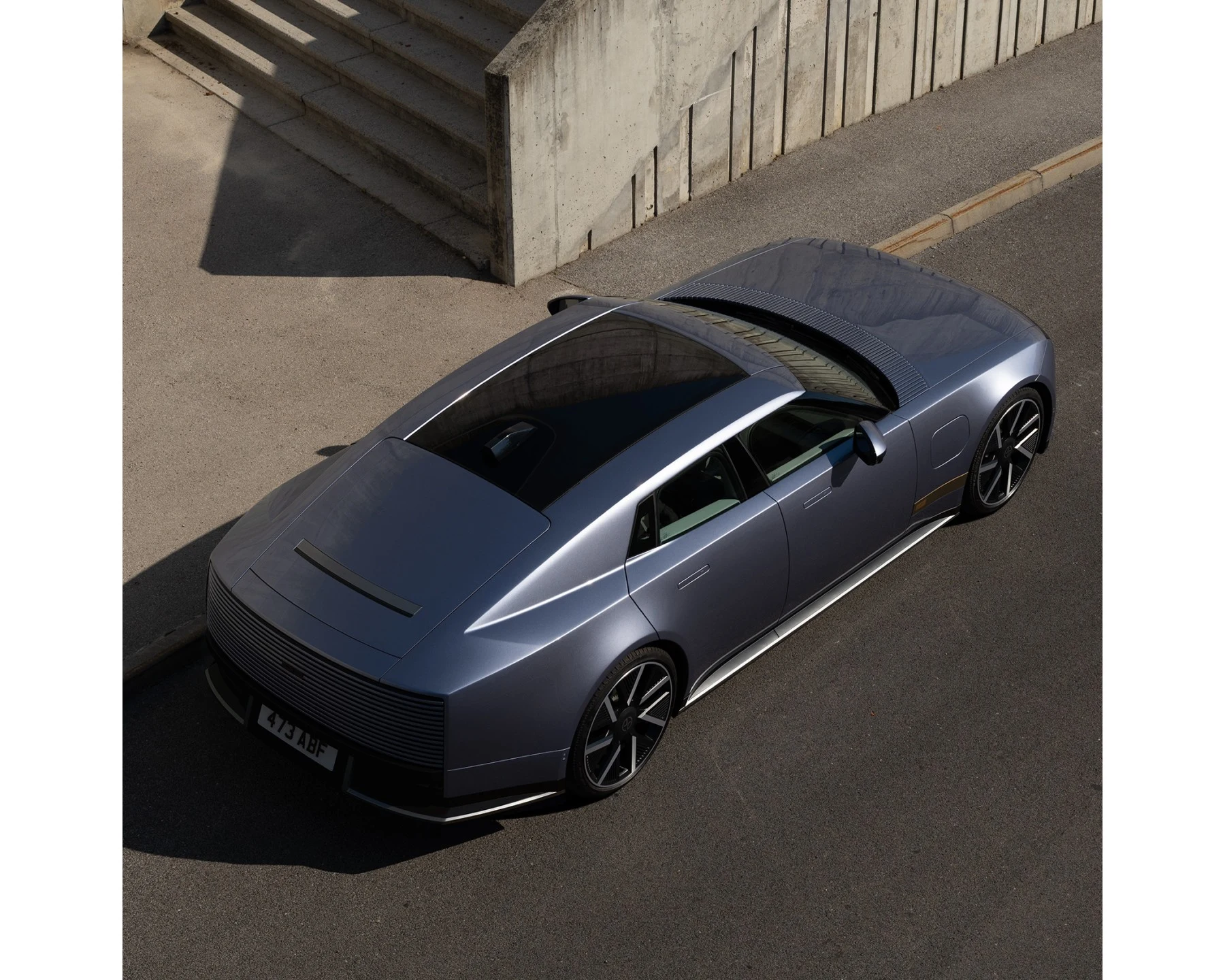
The Type 01 carries the long bonnet, low profile and emphatic linear graphics into a four-door GT. Seeing that connection makes the Type 00 more consequential to me. It is the visual argument behind a production car, and the question of what remains recognisably Jaguar becomes very real. 6
Jaguar currently publishes up to 1,030 PS, up to 450 miles of WLTP range and a 3.2-second 0–62 mph time for Type 01. These are Jaguar’s published figures; the company says final customer models and features may change before launch. They belong to the Type 01, rather than the Type 00 pictured above. 7
The brand I bring to the image.
My response to the car is also coloured by the rebrand that preceded it in November 2024. Jaguar introduced a new identity and the Copy Nothing direction before revealing the Type 00. 2
I found that change difficult to connect with. Jaguar had long occupied a particular place in my imagination: elegance, a little danger, and a restrained, masculine confidence. That is my reading of the brand, built over years. The fashion-led campaign, vivid colours and androgynous styling suddenly spoke in a very different register.
A brand should have the freedom to broaden its audience and explore different expressions of identity. What unsettled me was how abruptly the emotional thread seemed to disappear. I wanted to recognise something I could carry into the new direction.
As a designer, I understand the attraction of a clean break. It makes a clear statement. But heritage is also a resource: a set of feelings, proportions and associations you can transform. I wanted Jaguar to show me more of that transformation. With the Type 00, I am still searching for the connection between the confident new language and the particular kind of desire I associate with Jaguar.
Spyker turns the volume up.
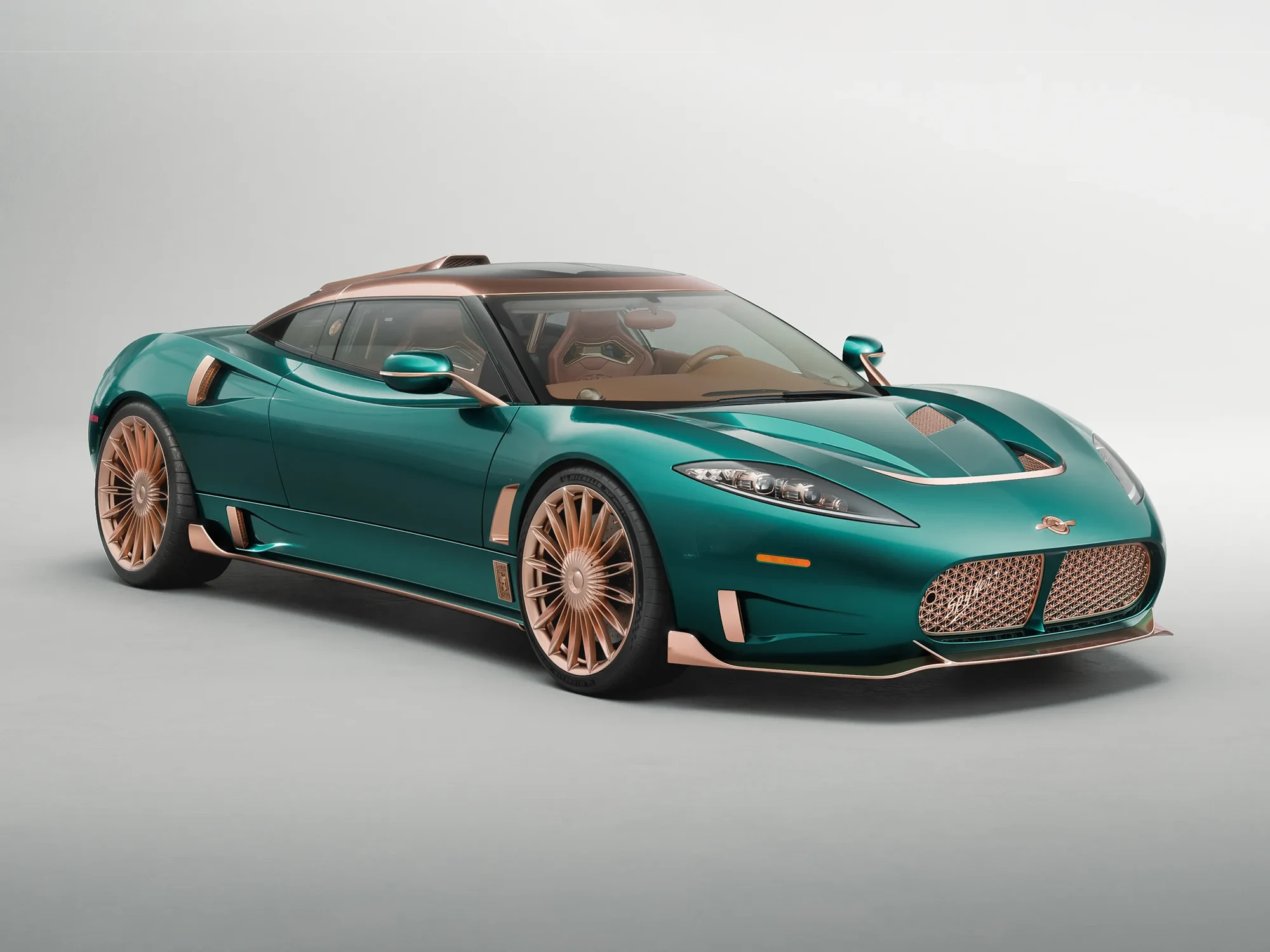
The C8 Preliator XXV Coupé was unveiled at The Quail in August 2026, with founder and CEO Victor Muller presenting Spyker’s next chapter. The company announced a series of 25 cars. 3
Where the Jaguar gives me a large, quiet gesture, the Spyker invites my eye to keep moving. The curved body, intricate wheels, openings and rose-gold accents create a kind of visual abundance. I find it almost Victorian in spirit: a fascination with mechanisms, ornament and the pleasure of making something elaborate.
That is my association. Spyker’s own reference is aviation, and you can see why. The canopy, intakes and instrument-like details belong to a coherent mechanical world. 4
It comes close to too much. I can imagine someone looking at the same car and finding it fussy, extravagant, even a little bling. I understand that reaction. Yet to my eye, the details keep finding their way back into the whole. There is a line to follow. The richness has a rhythm.
The pleasure of seeing how it works.
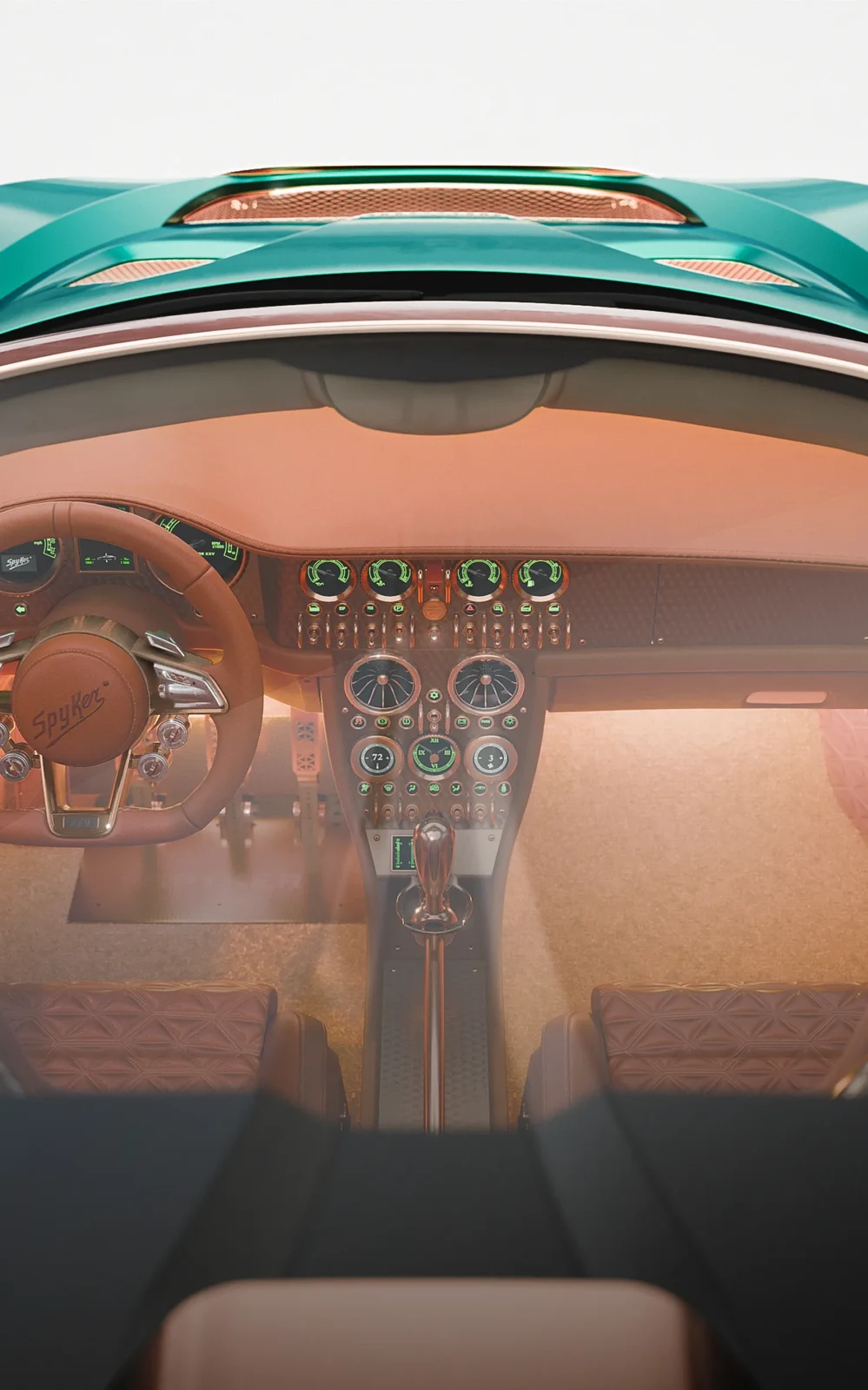
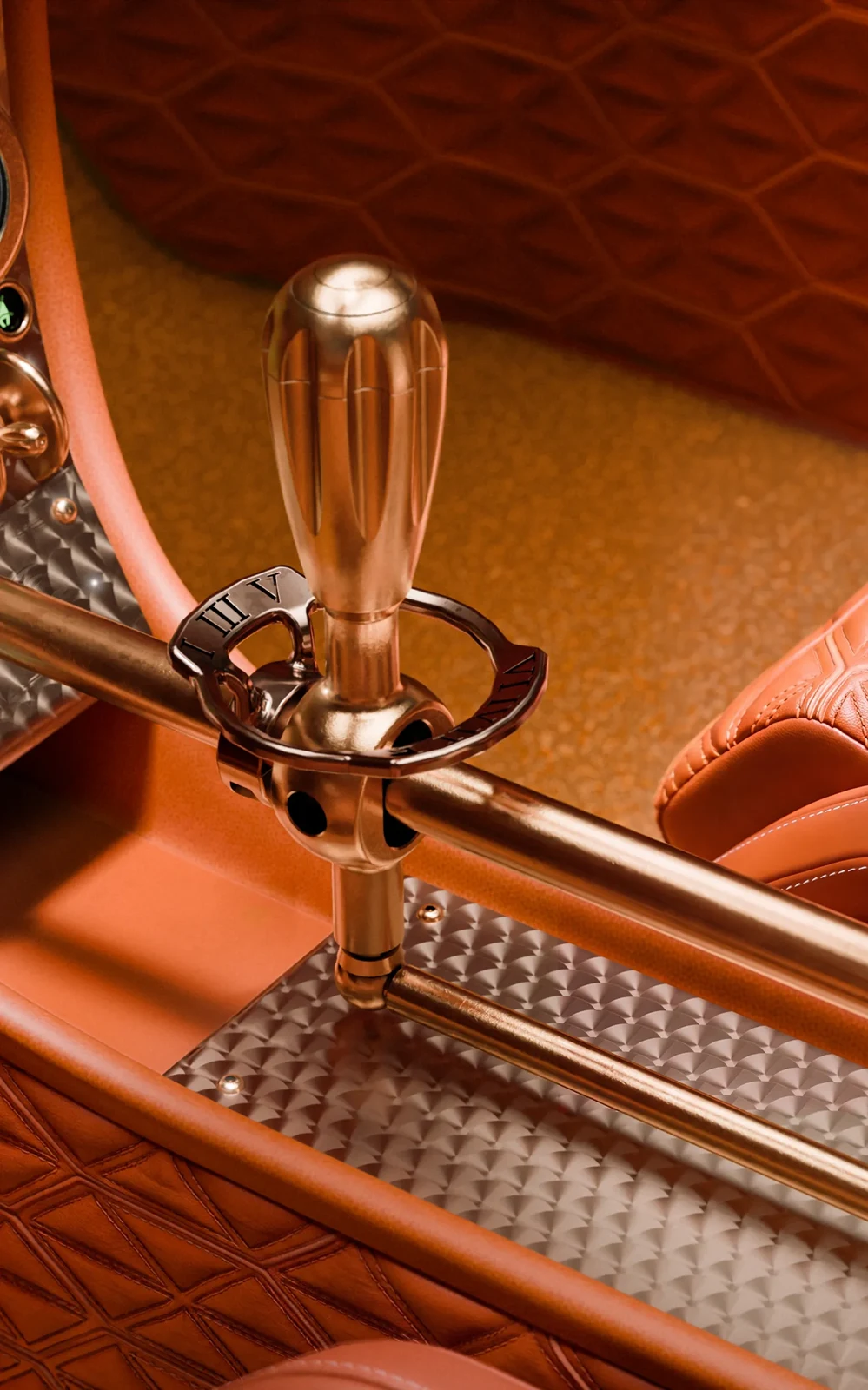
The cabin is where my preference becomes clearest. The exposed gear linkage gives a movement a visible form. A control looks like something you can take hold of. The gauges, leather and metal make me want to understand the object through my hands.
There is a particular satisfaction in that kind of design. You can trace an intention from the overall character down to a small component. A detail feels as though somebody stayed with it until it belonged.
Spyker describes a hand-built aluminium body and a deliberately manual driving experience. Those choices help explain the appeal, though the images alone cannot tell me how a control feels or how well a car is finished. 3
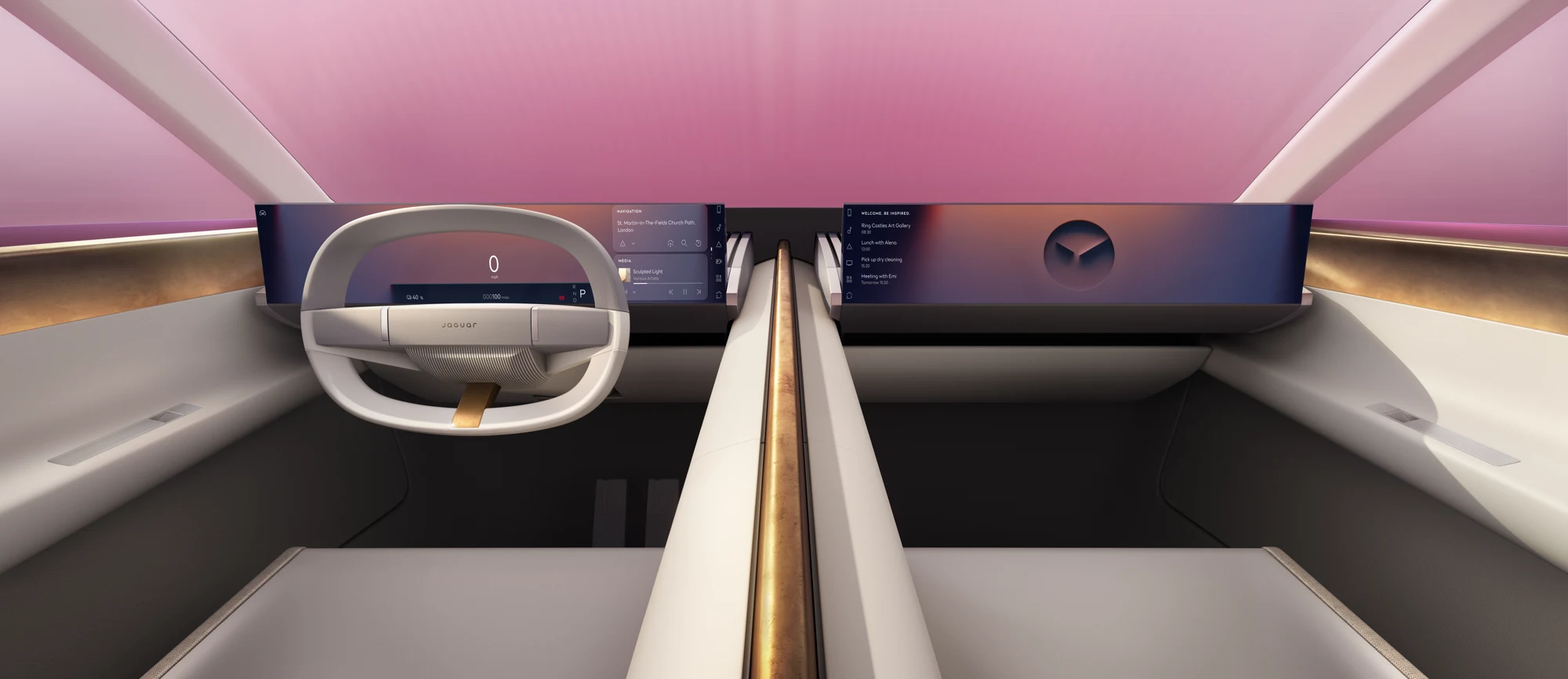
The Jaguar deserves a fair look here too. Its interior uses brass, travertine and textiles: a material idea with its own ambition. 1 Craft can be present in a large, quiet surface. The difference for me is how directly the Spyker lets me imagine the act of using it. I feel closer to the work.
The work behind the line.
Both approaches demand discipline. Reduction exposes proportion because there is so little else to look at. Abundance exposes relationships because every extra element has to earn its place.
I would be suspicious of a rule that made one automatically better. A curve can be lazy. A straight line can be exquisite. Ornament can give an object a voice; it can also drown one out. My interest is in the quality of the decisions and the feeling they leave behind.
This is where the comparison reaches my own practice. I often work towards clarity. I remove things, simplify a layout, search for the few elements that can carry an idea. But looking at the Spyker reminds me to ask what I might be losing along the way. A distinctive detail may deserve the time and space to become part of the identity.
The challenge is to keep looking at the whole while caring enough about the parts. I want the design to feel considered at both distances.
The number of lines tells me very little. What matters is the judgment behind each one.
Sander Oord / A design note
For now, I lean towards the Spyker.
I find it encouraging that these two designs can exist in the same world. One brand is proposing a dramatic reset. The other is making its recognisable obsessions even more visible. Each asks for a particular kind of taste.
My taste leads me towards the Spyker. I enjoy the generosity of it, the curves and the slightly excessive celebration of making. Its details give me places to stay. I can imagine returning to them and finding something else to appreciate.
The Type 00 leaves me with questions. I would like to stand beside it, walk around it and see whether the restraint acquires a different tension in real light. I am willing to have my mind changed.
Until then, that borrowed line remains useful as a provocation. Anyone can draw straight lines. Making a design worth spending time with takes judgment, care and a point of view. On this occasion, I feel those things more immediately in the Spyker.
The models behind the comparison.
Published model information checked on 20 October 2026. Spyker figures below are manufacturer claims. Type 00 is a non-production concept; production-car range targets are not presented as its specifications.
| Detail | Jaguar Type 00 | Spyker C8 Preliator XXV Coupé |
|---|---|---|
| Status | Electric design vision; non-production | Announced hand-built series of 25 |
| Unveiled | December 2024, Miami Art Week | 14 August 2026, The Quail |
| Powertrain | Electric concept | 4.0-litre twin-turbo V8; six-speed manual |
| Published output | No production output specification used here | 800 hp; 1,000 Nm (Spyker figures) |
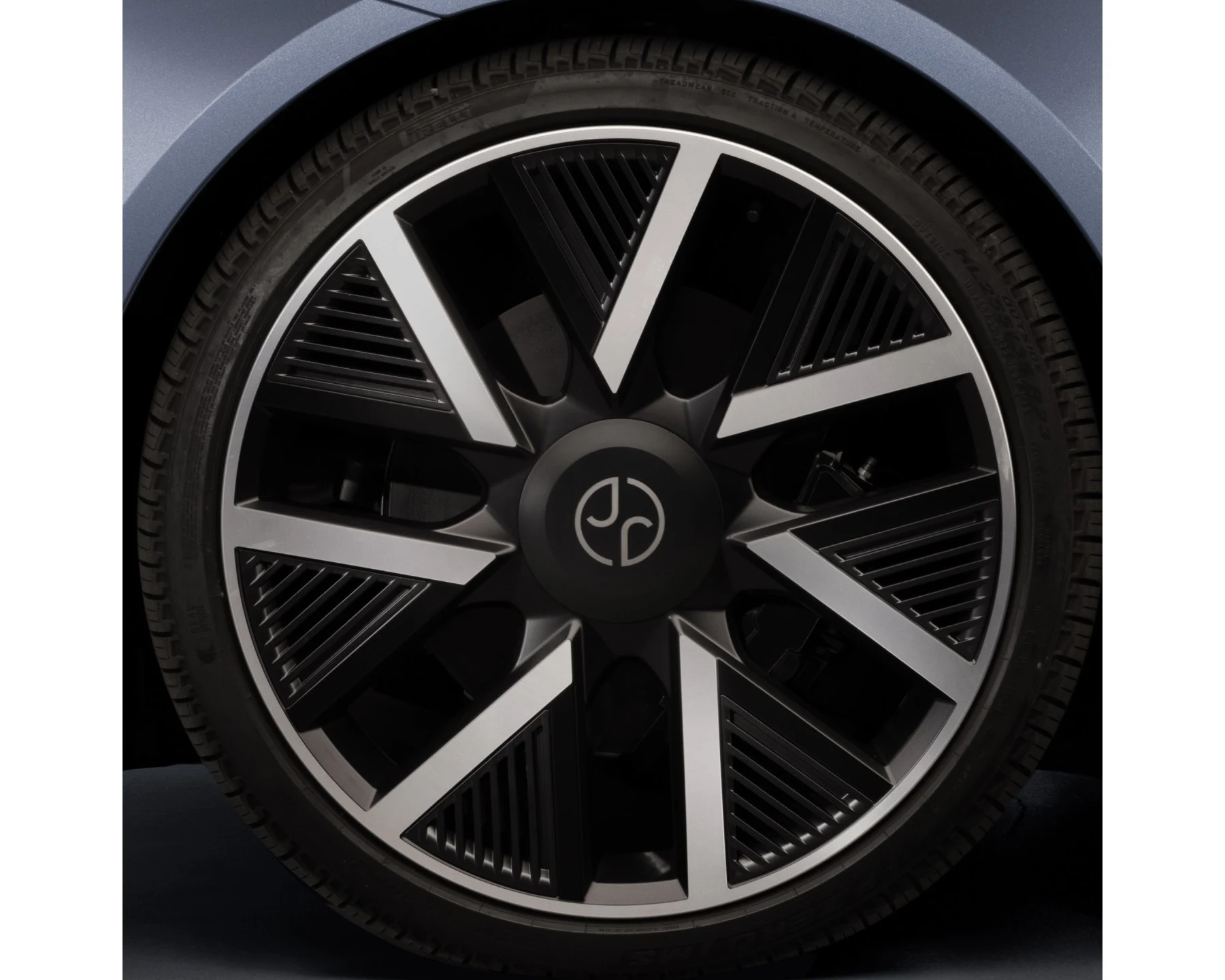
| Distinctive construction / materials | 23-inch wheels; brass, travertine and textiles | Hand-built aluminium body; rose-gold brightwork |
| Design credits | Constantino Segui Gilabert, chief exterior designer; Tom Holden, chief interior designer; creative leadership: Gerry McGovern (at reveal) | Victor Muller, by his account in an interview with The Autopian; Spyker credits its team of designers, engineers and coachbuilders. Body panels: Coventry Prototype Panels. |
Model and credit sources: Jaguar reveal, Spyker release, Spyker design presentation and Victor Muller interview.